The project Inclusion, Participation, and Peace Building through Mediation in Media (IncludeMe+), aims to empower higher education institutions, media, civil society organisations, and students to become responsible and active collaborators in shaping the future of communication, to promote and establish inclusion, participation, and peacebuilding across Europe. The project will increase participation and civic engagement by raising awareness and understanding of the context and values of the European Union, the principles of unity and diversity, and by providing new ways of thinking about and creating media content.
To achieve the above objectives and address the priorities, the partnership creates a set of tangible outcomes, including a report based on participatory action research on the topic, an innovative training program accompanied by a training and transferability guide, and a video vox pop showcase docuseries.
Experience Lab is coordinating the project, which is led by Emmanuel Acquah, Associate Professor in Education at Åbo Akademi University. In addition, Experience Lab is involved in all project activities, ranging from dissemination to research and the design and development of the outcomes.
The project is co-funded by the European Union and the duration of the project is 1.12.2023-31.5.2026.
How do you make a city pleasant, productive, accessible and easy to interact with? These are issues that are being worked on within the URBACT program, which consists of networks of cities around Europe that work together to strengthen the development of localities by exchanging experiences and building networks between regional and local actors.
Åbo Akademi University’s Experience Lab is the first academic project partner in URBACT, which today includes all EU member states and also Norway and Switzerland.
The Metacity network , which focuses on small and medium-sized cities, aims to increase competitiveness of small and median tech-aware cities, benefiting from the opportunity to enhance service efficiency and citizen satisfaction provided by the metaverse. By integrating metaverse technologies, cities can create immersive digital environments for education, healthcare, tourism, and public services, enabling streamlined communication, remote access to services, and personalized experiences, levelling the playing field with larger cities. Metaverse-driven urban planning fosters innovation, economic growth, and ensures that citizens have access to cutting-edge solutions, ultimately improving their overall quality of life.
Experience Lab works with the city of Nykarleby in Metacity. The network also counts actors from nine other European countries participate, including Härnösand in Sweden, with which we will collaborate closely, and is led by Fundão in Portugal, with whom we have collaborated in previous URBACT and INTERREG Europe projects.
The project SPROK has received Research to Business funding from Business Finland for the years 2023-2025. The overarching aim is to evaluate different commercialization routes to find the best business strategy for our digital second language learning game. SPROK’s development stems from the significant achievement gap between students with immigrant and native backgrounds, and the challenges many adult immigrants face in obtaining work due to insufficient language skills. We hope to encourage growth in the Finnish and international community by developing linguistic skills as a core class material in mainstream and immigrant classrooms. Sprok is designed to complement traditional workbooks while still allowing teachers to understand student progress. Although Sprok is designed to meet the needs of immigrants and mainstream classrooms, it is well-suited for private consumer use, thus, has benefits for increasing the number of highly qualified workers, which fills the gap in the ageing Finnish and global population.
The target groups are migrants, mainstream classrooms, and private consumers.
Sprok is a digital second language learning game targeting migrants, mainstream classrooms, and private consumers.
Supporting L2 learning is essential to improving educational, economic, and social opportunities for immigrant populations. Sprok’s design will encourage growth in the Finnish and international community by developing linguistic skills as a core class material in mainstream and immigrant classrooms. Sprok is designed to complement traditional workbooks while still allowing teachers to understand student progress. Although Sprok is designed to meet the needs of immigrants and mainstream classrooms, it is well-suited for private consumer use, thus, has benefits for increasing the number of highly qualified workers, which fills the gap in the ageing Finnish and global population.
The uniqueness of Sprok is that it is based on the highly reputed Finnish national core curriculum, the Common European Framework of Reference for language (CEFR) skills, academic research, and cultural knowledge. Additionally, it will have the following educational features: a teacher backend, a monolingual approach (uses Swedish to teach Swedish), collaborative gameplay, an explorable environment, a design enabling expansion to a broader audience, and a feedback algorithm to enhance learning. The game will be developed in an iterative process that requires the active involvement of potential end-users. This ensures the game is both educative, fun, and attractive for various stakeholders.
The project has received Research to Business funding from Business Finland for the years 2023-2025. The overarching aim of this project is to evaluate different commercialization routes to find the best business strategy for our digital second language learning game SPROK. in order to make it a highly successful global educational game for digital second language learning. An additional aim is to continue the applied research of Sprok.
AILIT är ett forsknings- och utvecklingsprojekt som arbetar för att stärka AI-litteraciteten inom utbildning. Projektet fokuserar på att utveckla kunskap, färdigheter och förhållningssätt som hjälper elever och lärare att förstå, använda och kritiskt granska artificiell intelligens på ett ansvarsfullt sätt.
Genom forskningsbaserat utvecklingsarbete, samskapande och nära samarbete med skolor utvecklar projektet undervisningsmaterial och pedagogiska modeller som stöder undervisning om artificiell intelligens. Materialen behandlar bland annat hur AI fungerar, dess möjligheter och begränsningar, etiska frågor samt AI:s påverkan på individer, utbildning och samhälle.
Projektet arbetar med att ta fram material för åk 1-6, 7-9 samt för andra stadiet. Projektet involverar lärare, elever, lärarstuderande och lärarutbildare i utvecklingen av undervisningsmaterial som testas och vidareutvecklas i autentiska undervisningsmiljöer. Målet är att skapa praktiska och forskningsbaserade resurser som stöder skolor i arbetet med att utveckla elevers AI-kompetens och digitala handlingsförmåga.
Ailit är ett samarbetsprojekt mellan Experience Lab och Helsingfors Universitets svenska professur i AI och samhälle (Linda Mannila). Projektet bidrar till att utveckla framtidens undervisning i en tid där artificiell intelligens får en allt större betydelse för lärande, arbete och samhällsutveckling. Projektet finansieras av Svenska Kulturfonden.
AILIT is a research and development project that aims to strengthen AI literacy in education. The project focuses on developing the knowledge, skills, and critical awareness that help pupils and teachers understand, use, and critically evaluate artificial intelligence in a responsible and informed manner.
Through research-based development, co-creation, and close collaboration with schools, the project develops educational materials and pedagogical models that support teaching and learning about artificial intelligence. The materials address topics such as how AI works, its opportunities and limitations, ethical considerations, and the impact of AI on individuals, education, and society.
The project develops educational resources for primary education (grades 1–6), lower secondary education (grades 7–9), and upper secondary education. Teachers, pupils, student teachers, and teacher educators actively participate in the development process, and the materials are continuously tested and refined in authentic learning environments. The goal is to create practical, research-based resources that support schools in fostering pupils’ AI literacy and digital competencies.
AILIT is a collaborative project between Experience Lab and the Swedish-language Professorship in AI and Society at the University of Helsinki (Linda Mannila). The project contributes to shaping the future of education in a time when artificial intelligence is becoming increasingly important for learning, working life, and society. The project is funded by the Swedish Cultural Foundation in Finland.
Vårdsektorn brottas med överbelastade vårdare och brist på resurser, vilket utgör en av de främsta utmaningarna för patientsäkerheten i Finland. Felaktig läkemedelsbehandling kan leda till allvarliga biverkningar och ökade vårdkostnader. En potentiell lösning som diskuteras är användningen av sociala robotar, vilka har potential att erbjuda flera fördelar för både vårdpersonal och patienter.
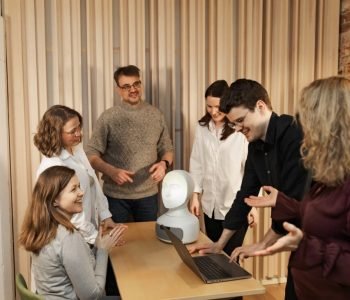
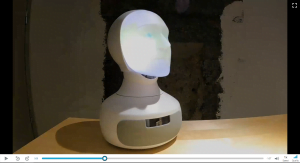
Det tvärvetenskapliga projektet PharmAInteraction utvecklar en banbrytande applikation med målet att förbättra patientsäkerheten genom att låta roboten Furhat ge läkemedelsrådgivning på apotek. Samarbetet inkluderar hälsovetenskaperna, Experience Lab, enheterna för informationsteknologi och enheten för farmaci vid Åbo Akademi och ingår i profilområdet Lösningar för hälsa. Vi arbetar enligt en samskapande filosofi och involverar bland annat apotekspersonal, representanter för apotekskunder, studenter, Finlands Apotekarförbund och Klient- och patientsäkerhetscentret i utvecklingsprocessen. Den första prototypen fokuserar speciellt på svenska som minoritetsspråk och är avsedd för att ge läkemedelsinformation om akut-p-piller till apotekets kunder.
Experience Lab spelar en nyckelroll genom att utvärdera robotars funktion inom läkemedelsinformation och patientsäkerhet, utforska etiska frågor rörande hållbarhet och tillit kring interaktion med sociala robotar, och hantera den tekniska utvecklingen och designen av robotapplikationsprototypen. Vi leder också den samskapande processen för projektet.