Internet of Things (IoT) in Energy systems

The focus of the Internet of Things (IoT) in Energy systems-project is to boost energy technology research through a new form of multidisciplinary cooperation. Through the project, R&D personnel and ICT- and energy technology experts meet and cooperate in a new way towards a smarter specialization.

Project description:

The aim of this project is to boost energy technology research through a new form of multidisciplinary cooperation where R&D personnel and ICT- and energy technology experts meet to cooperate in a new way towards a smarter specialization. The new kind of energy technology research and interdisciplinary R&D cooperation also aims at strengthening the regional innovation capacity. New equipment and demo environments are raised and built up where different levels of energy systems and their specific qualities can be studied, modelled, stimulated and tested through IoT based methods and tools. All to better understand and implicate the dynamics in the systems and to increase the development of new technology, applications and new services in cooperation with regional organizations and businesses.

Project actions:

  • Elaborate a research- and demo environment for energy technology and system development where IoT- based methods and tools have a crucial role.
  • Strengthen regional knowledge within the field of energy research through a new form of multidisciplinary R&D to work towards a smarter specialization
  • Create a demo environment / Living Lab to conduct field studies and demonstrations of energy related products with IoT functions, energy transformation units and complete energy systems
Open Social Innovation policies driven by co-creative Regional Innovation…

The Osiris project is back with a new season of Open Social Innovation for regional development.

In the first season OSIRIS demonstrated how actors with different experiences and expectations can solve real-life societal challenges through OSI methods – stimulating a bottom-up co-creation process for regional development.

And here is a video to give you an overview of the results and long term impact of the first phase of the project.

Towards the end of season one, the pandemic hit and limited the important face to face interactions. This disrupted the collaboration process, but on the other hand, boosted smart working, and many distance-based collaborative tools for co-creation etc.

It did, however, leave us all with a feeling of uncertainty about the future and the role that OSI can play in regional development. But never questioning the need for engaging citizens – just finding new ways of doing it.

Europe is currently facing the challenges of the ecological transition and digital transformation. This means re-designing the human interaction with the physical environment for a more resilient society and sustainable way of living. In this post pandemic recovery, getting everyone onboard in a green and digital transition is at the forefront.

Building on prior results, the partners of Osiris will contribute to face these challenges by the following actions:

  1. conduct an evaluation of the OSI activities in the shadow of COVID-19, examining how OSI may be used towards an ecological and digital transition
  2. exchange experiences on the implementation of the recovery and resilience actions. A set of four interregional exchange events, including study visits will allow such a comprehensive review of experiences of handling the impact of the pandemic on OSI for regional innovation in diverse sectors: health, energy, culture, tourism and digital transformation of public administration.
  3. Through a series of webinars on the OSIRIS Youtube channel and interactions via social media, new learnings and good practices will be disseminated and communicated to a wide audience of policy makers, businesses, researchers and citizens.

Based on these additional activities, the partners will produce:

  • Six new good practices boosting ecological and digital transition
    Improvements of policy instruments
  • Six streamed events/webinars focused on the learnings of the exchanges of experience and helping to understand the impact of Covid on regional development and face the ecological and digital transition.

We welcome you all to this new season on all our channels.

@geing Online

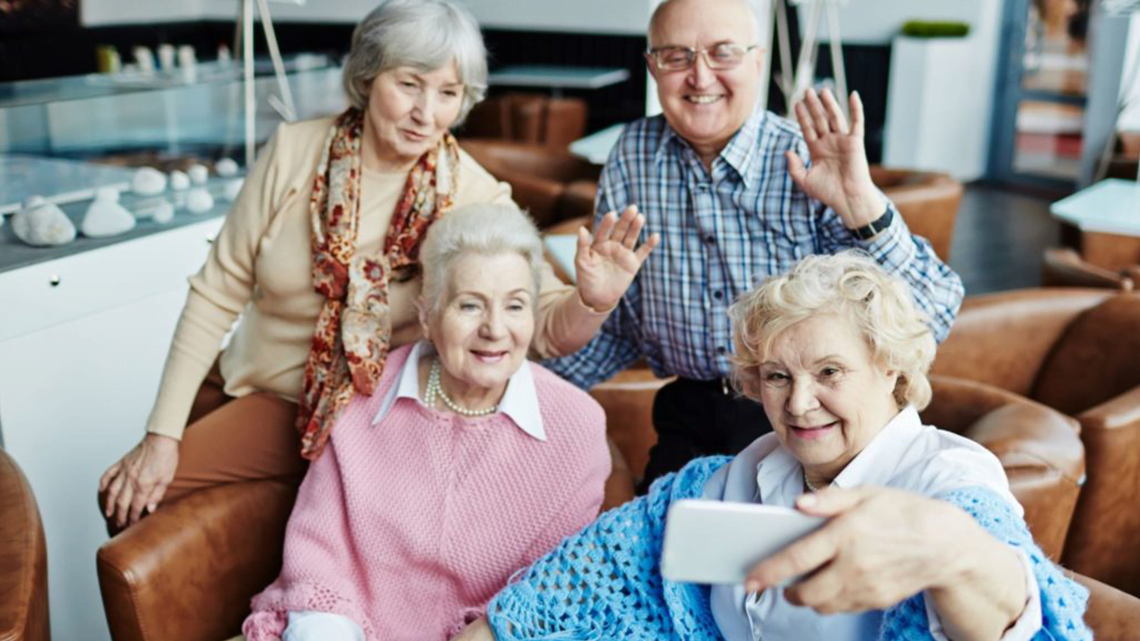
Digital services for meaningful social activities among the elderly in the Bothnia region.

The project develops and evaluates a custom application (for touch screen/tablet) – with a focus on promoting meaningful social activities among the elderly in the Bothnia region. The planned application will support the opportunities for older people living at home to maintain social networks, relationships, and activities.

In the co-creation of the application, existing evidence-based prototypes are further developed and tested in collaboration with end-users and stakeholders in three municipalities in the project region. An open innovation approach with strong user involvement is applied throughout the project from prototype to finished product.

At the end of the project, three different cases will be presented, where various customized versions of the digital solution have been developed according to the specific needs and conditions identified in the different municipalities. The target group of the project includes stakeholders in the field, including smaller to medium-sized regional companies that, at the end of the project, can introduce the digital solution into their product range. Regional companies on both sides of the Kvarken Strait are also involved in the operation during the project period.

http://www.ageingonline.fi

Bothnia Learning Hub

[EN]
The Bothnia Learning Hub leverages the opportunities of digitalization. The project further develops and disseminates good practices of digital learning environments and experiments with new technologies and working methods. The focus is on teacher education at Åbo Akademi and teachers in the field. This is done through a development process in the form of a co-creative process at three levels, leading to a knowledge lift for all actors.

The project is one of Prime Minister Sipilä’s spearhead projects for developing teacher education.

[SV]

Bothnia Learning Hub utnyttjar digitaliseringens möjligheter. Projektet vidareutvecklar och sprider god praxis av digitala lärandemiljöer och experimenterar med nya teknologier och arbetssätt. I fokus är lärarutbildningen vid Åbo Akademi och lärare på fältet. Detta sker genom ett utvecklingsarbete i form av en medskapande process på tre nivåer som leder till ett kunskapslyft hos alla aktörer.

Projektet är ett av regeringen Sipiläs spetsprojekt för att utveckla lärarutbildningen.