Innovation in Urban Planning

Härnösand and Nykarleby are two cities facing similar challenges: Sparsely populated regions, ageing population with young people moving away and society turning multicultural and -lingual. Both cities need to develop inclusive, digitally supported ways of including residents in planning and decisionmaking. Their regions share many similarities, but there are also differences in both circumstances and challenges that merit comparison and exchange. Urban planning is one example of a sector where there is need of new tools and ways of working to create paths towards a sustainable society.  

Åbo Akademi Experience Lab will focus on digital transformation, especially the meetings between human and technology including the context where they occur. We use user research methods and human-centred design to analyse and design not just digital interfaces but the processes where they are included as well. 

Innovation in Urban Planning will result in a pre-study on the need to develop new dialogue tools for the citizens, identify the potential of new technology and enhance the innovation capacities of the municipal organizations. 

Innovation in Urban Planning is funded by the Interreg Aurora programme. 

Contact: Kimmo Rautanen, project manager (ÅAU), Kimmo.rautanen (at) abo.fi 

SoRoMa

[en/sv]

Alla elever får inte det nödvändiga stöd som de behöver i klassrumsmiljön. Lärarna är ofta underbemannade, vilket gör det svårt att erbjuda den grad av individuell handledning som skulle behövas.

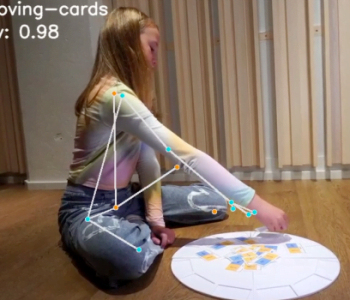
Med detta i åtanke syftar projektet SoRoMa (Sociala robotar i matematikundervisningen) till att ta några inledande steg mot att erbjuda individuell handledning till elever som behöver det. Genom att använda ett unikt tillvägagångssätt med ett matematikbaserat kortspel, använder detta projekt en social robot som handledare. Med hjälp av AI-teknologi anpassar sig roboten till situationen under handledningen.

Projektet finansieras av Högskolestiftelsen i Österbotten.


SoRoMa

[en/sv]

Not every student receives the necessary support within a classroom setting. While a one-to-one setting often would be for the best, the reality is that teachers often are understaffed, making this hard to achieve.

With this in mind, the project SoRoMa (Sociala robatar i matematikundervisningen) aims to make some preliminary steps towards providing individualized tutoring to students who need it. Using a unique approach involving a math-based card game, this project employs a social robot acting as a tutor. With the help of AI-techonlogy the robot is meant to adapt to the situation unfolding during the tutoring.

The project is funded by Högskolestiftelsen i Österbotten.

www.freepik.com

VRVittne – Ögonvittnesstudie i Virtual Reality

[en/sv]

I rättsprocesser läggs stor vikt vid ögonvittnesmål. I många länder betraktas ögonvittnesidentifikationer som ett direkt bevis för skuld. På senare år har forskning dock visat att ögonvittnen inte alltid är så tillförlitliga som man tidigare antagit. Till exempel finns det globalt sett tusentals fall där dömda personer i efterhand med hjälp av DNA-bevis visats vara oskyldiga. Analyser av dessa fall visar att felaktiga ögonvittnesmål bidragit till domen i 70% av fallen.

För att höja vår rättssäkerhet behöver vi mer kunskap om vilka faktorer som påverkar tillförlitligheten av ögonvittnens identifikationer av gärningspersoner.

VRvittne är en rättspsykologisk studie där vi genom experiment i virtuell verklighet (VR) undersöker hur nivån av hotfullhet påverkar vittnens emotionella tillstånd och visuella uppmärksamhet, och hur dessa saker i sin tur påverkar vittnens förmåga att korrekt identifiera gärningsmän. Emotionella reaktioner mäts med hudkonduktans, och visuell uppmärksamhet med en ögonrörelsekamera.

Som en del i projektet har vi även utvecklat en AI-baserad mjukvara som analyserar videofiler och automatiskt identifierar ansiktens positioner och ger koordinater för dem, vilket kan användas för analyser av ögonrörelser.

Studien finansierades av Svensk-Österbottniska samfundet och genomförs i samarbete med forskare från New York University.


VRVittne – Eyewitness Study in Virtual Reality

[en/sv]

In legal proceedings, great importance is placed on eyewitness testimony. In many countries, eyewitness identifications are considered direct evidence of guilt. However, recent research has shown that eyewitnesses are not always as reliable as previously assumed. For example, globally, there are thousands of cases where convicted individuals have been later proven innocent with the help of DNA evidence. Analyses of these cases show that erroneous eyewitness testimony contributed to the verdict in 70% of the cases. To enhance our legal certainty, we need more knowledge about the factors that affect the reliability of eyewitness identifications of perpetrators.

“VR Witness” is a forensic psychological study where, through experiments in virtual reality (VR), we investigate how the level of threat affects witnesses’ emotional states and visual attention, and how these factors, in turn, affect witnesses’ ability to accurately identify perpetrators. Emotional reactions are measured using skin conductance, and visual attention is measured using an eye-tracking camera. As part of the project, we have also developed an AI-based software that analyzes video files and automatically identifies facial positions and provides coordinates for them, which can be used for eye movement analyses.

The study was funded by the Swedish-Ostrobothnian Society and is conducted in collaboration with researchers from New York University.

Image by www.freepik.com

Att möta metaversum – att skapa nätverk för framtiden

[en/sv]

I dagens läge är Metaverse mera ett koncept än en verklig plattform, men förväntningarna är stora och många företag satsar ansenliga summor på att etablera sig virtuellt med sikte på ett kommande, stort Metaverse.

Syftet med detta projekt var att sammanföra aktörer för att orientera oss i olika aspekter av Metaverse, med sikte på ett framtida större forskningsprojekt. I Metaverse finns en mångfald av teman att förhålla sig till och orientera sig i: existerande plattformar, teknologins möjligheter och begräsningar, affärsmodeller, etik, innehållsproduktion och virtuella spelmiljöer, datasäkerhet, människans upplevelse av att agera i Metaverse etc.

Projektet gav ett flertal resultat:

  • Experience Lab kom med som finländsk partner i ett europeiskt Urbact nätverk – https://urbact.eu/networks/metacity som utröner små och medelstora städers ingångar i metaverse. Arbetet i projektet sker tillsammans med Nykarleby stad.
  • Experience Lab deltog i konferensen Smart City Expo and Conference med temat metaversum
  • Experience Lab deltar i referensgruppen för Åbo Akademis projekt DUTAR kring virtuella miljöer för undervisning och forskning

Kontakt: Yvonne Backholm-Nyberg


Meeting the Metaverse – Creating Networks for the Future

[en/sv]

At present, the Metaverse is more of a concept than a real platform, but expectations are high, and many companies are investing substantial sums to establish themselves virtually in anticipation of a forthcoming, large-scale Metaverse.

The purpose of this project was to bring together stakeholders to explore various aspects of the Metaverse, aiming for a future larger research project. The Metaverse offers a variety of themes to consider: existing platforms, the possibilities and limitations of technology, business models, ethics, content production, virtual gaming environments, data security, human experience of acting in the Metaverse, etc.

The project yielded several results:

  • Experience Lab joined as a Finnish partner in a European Urbact network – https://urbact.eu/networks/metacity which explores the entry points of small and medium-sized cities into the Metaverse. The work in the project is carried out in collaboration with the city of Nykarleby.
  • Experience Lab participated in the Smart City Expo and Conference with the theme of the metaverse.
  • Experience Lab is part of the reference group for Åbo Akademi’s project DUTAR on virtual environments for teaching and research.

Contact: Yvonne Backholm-Nyberg

Digital4All

The overarching aim of the project “DIGITAL4ALL – Building the capacity of universities to develop digital strategies to serve all learners” is to support higher education institutions in designing and providing digital learning experiences that are inclusive and equitable for all, through appropriate strategies and practices. The project supports a digital transition where participation of all students is established, especially those at risk of marginalisation due to diverse needs. It provides educators with digital and pedagogic competences and strategies needed to provide student-centred experiences.

To achieve the above objectives and address the priorities, the partnership creates a set of tangible outcomes, including an innovative toolkit, a training course, and an e-learning platform, and a repository of open education resources on digital inclusion in higher education.

In addition to being involved in all project activities, Experience Lab is co-leading a work package investigating the state-of-the-art of digital equity and inclusion in higher education. 

The project is co-funded by the European Union and the duration of the project is 1.12.2023-30.11.2025. It is led by Åbo Akademi University.

Project partners are:

National University of Ireland

Innovade LI LTD, Cyprus

All Digital, Belgium

International Hellenic University, Greece

University of Nicosia, Cyprus

Inclusivehubs

The purpose of the INCLUSIVE HUBS project is to help make school spaces places for inclusion where all learners will feel welcome, respected, and valued, particularly those with fewer opportunities like migrants. Through the project implementation, we will support holistic approaches to teaching and learning as well as collaboration among all actors relevant to schools (school staff, communities, migrant learners, and their families) to transform schools into inclusive hubs. According to the European Commission, low proficiency and early school leaving can be a result of the struggle in learning and social exclusion, a phenomenon faced by many European areas. Several European Union (EU) countries have already developed national strategies to facilitate stronger communication between schools and local communities, and provide measures to foster inclusion. Therefore, the project will contribute to those efforts by developing materials and tools focused on wellbeing, inclusion, mental health, and personal development.

Objectives

  • Develop an evidence-based whole school and community program to transform schools into inclusive hubs
  • Build the capacity of school leaders, teachers, school staff, and local actors to better support migrant learners’ inclusion in the education system and society at large.
  • Develop the language skills, wellbeing, and resilience of migrant learners and their families.
  • Build the capacity of migrant parents to act as cultural mediators and interpreters in local schools.
  • 1 school per country participant will be developed into an inclusive hub.

https://inclusivehubs.eu/

REDI SOTE

Smart Digital Social and Health Services

The social and healthcare sector needs new innovative services to meet the challenges of today and the future. New innovations arise by combining resources, expertise, and new knowledge.

The purpose of the REDI SOTE project is to promote collaborative development in a networked ecosystem of businesses, cities, research institutions, and universities, as well as to utilize new technological innovations produced in other sectors in the field of social and healthcare services.

The goal is to open up new commercial opportunities for technology companies, low-tech social and healthcare businesses, and entrepreneurs planning to enter the industry.

The target groups of the project include:

  1. Technology companies aiming to offer their products and services in the social and healthcare sector,
  2. Low-tech social and healthcare businesses looking to improve their operations,
  3. New players starting businesses in the social and healthcare sector, and
  4. Indirectly, research and educational organizations, social and healthcare organizations, customers, students, and society as a whole.

The objectives are pursued by:

  • Assessing and developing the prerequisites and goals of technology companies to participate in the operation of social and healthcare service ecosystems,
  • Developing tools and metrics for evaluating co-development and jointly developed design solutions,
  • Implementing co-development pilots in innovation ecosystems in social and healthcare sectors in Uusimaa and Southwest Finland,
  • Stimulating broader discussions on impact-based decision-making and impact assessment.

Project results:

  • Collaborative development of digital services in the social and healthcare sector increases,
  • Business opportunities for companies expand and diversify,
  • Through digital solutions, the coverage, equality, and quality of social and healthcare services improve, and the efficient use of sector resources enhances,
  • The focus on impact-based decision-making promotes the appropriate use of resources and the quality of social and healthcare services.

Project Implementers:

  • Laurea University of Applied Sciences
  • Forum Virium Helsinki
  • Turku University of Applied Sciences
  • University of Turku
  • Åbo Akademi University

DIGI-MODE

The purpose of the DIGI-MODE project is to promote the increased usage of digital tools and in particular Virtual Reality solutions to companies located in Ostrobothnia. This is mainly achieved through the planning, development, demonstrations and validation of so-called digital twins. Three major digital twins will be developed in cooperation with local companies from different business sectors: The manufacturing industry, the real estate and construction sector and the energy sector.

A digital twin is a real-time virtual representation of a physical object or process. Digital twins can visualize data from different types of sensors, such as energy meters, water meters, cameras and other IoT devices. Using digital twins, it’s possible to streamline remote working, cooperation and maintenance. This is something which has grown increasingly relevant over the last few years.

The DIGI-MODE project is a collaboration between the University of Vaasa, VAMK, Novia UAS and Åbo Akademi. The project will make use of the existing infrastructure available at the University of Vaasa, Technobothnia, the Design Centre MUOVA (VAMK) and Experience lab at Åbo Akademi.

Results – Architectural Masser

More information at: http://www.digi-mode.eu/

Qvarken Game Lab

One of the biggest challenges in establishing the gaming industry in peripheral areas lies within the startup scene, working in a regional context where there is limited experience and few financiers. By establishing the cross-border competence center Qvarken Game Lab, this gap in the Botnia-Atlantica program area is compensated for.

The project’s focus is on gathering, refining, and advancing knowledge about the gaming industry to strengthen the gaming sector both cross-border and locally. The ambition of this intensive implementation project is for the initiative to develop and establish itself during the project period and then continue to grow independently after the project’s conclusion.

The project’s activities involve coordinating actors in a cross-border competence center for game development to gather education, research, and industry resources to collectively enhance innovation in the gaming industry and its interaction with other sectors and the surrounding society. This is achieved by creating meeting places for creative workshops, working on market-oriented gaming innovations with a focus on concrete results, strategically addressing gender equality issues in the gaming industry, and promoting collaboration between the gaming sector and other industries.

The overall goal and purpose of the project is to stimulate the establishment of a sustainable environment for game development and related activities through collaboration and interaction among project partners within the Botnia-Atlantica region’s innovation system. This is accomplished through various processes:


Establish Qvarken Game Lab

The goal of the competence center Qvarken Game Labs is to foster growth among gaming companies in the regions within the Botnia-Atlantica program area where the industry is currently lacking. This is achieved by networking, enhancing innovation and competitiveness through mentorship and expert knowledge, organizing creative spaces like game jams and hackathons, and working with venture capital to facilitate potential investments.

Research & Education

Qvarken Game Lab aims to strengthen and tailor the education available in the program area to better align with the gaming industry’s needs. This is accomplished through discussions between educational providers and the industry in coordinating the competence center. Relevant research and education are enhanced through collaboration with the competence center to elevate innovation and competitiveness.

This is facilitated through access to the User Experience Laboratory (Experience Lab), where gaming entities gain access to UX design expertise, research-based design methods, as well as equipment and techniques for testing the usability and user experience of their products. This occurs at various stages of development concerning the target audience.

Gender Equality & Inclusion

Qvarken Game Lab advocates for increased gender equality within the gaming industry. Since women are significantly underrepresented in gaming companies, the competence center strategically engages in initiatives to change attitudes and practices related to gender equality within the gaming sector. The focus is on leveraging the innovators, experts, and inspirers present in the regions.

Upon the conclusion of the project in June 2022, the competence center has developed or initiated the following processes:

  • Conducted a pilot initiative connecting a network of actors within the gaming industry, identifying effective methods and processes to enhance the gaming industry’s innovation capacity in the Botnia-Atlantica program area.
  • Strengthened the readiness of innovation system actors to contribute research and expertise to the competence center and to evolve collaboratively.
  • Ensured that gender equality, diversity, and accessibility permeate all parts of the project, contributing to a stronger competence center.

Experience Lab contributes by bringing expertise in user-centered design and research-based knowledge and methods in game development. Moreover, it connects to the growing research in gaming at the university and the networks associated with it.
digitalt på distans

Digital Innovation Processes at a Distance

The aim of the project is to:

Evaluate virtual co-creation processes based on the needs of regional actors regarding innovation work and open innovation (both process and tools) from a user perspective, and based on this knowledge,

Develop concepts for digitally based co-creation with a good user experience. The concept development will result in concrete tools and processes for implementation and application in various contexts, with examples in the form of validated best practices.

The project includes the following actions:

A preliminary study in the form of interviews with 10-15 key persons in companies and organizations working with innovation and development.

Implementation of 2-3 pilot experiments with tools identified to address challenges in the process.

Compilation of a checklist for virtual innovation processes based on the results.

Presented through a workshop for interested companies and organizations.

The project results in:

Verified knowledge about the user experience of co-creation with digital tools – both the usability of the tools, the content experience, and the social experience – and the processes in which these tools are included.

Improved development processes that consider the needs and expectations of all participants and lead to better results.

This also supports and develops participants’ learning and innovation capacity.

Support in the form of concrete manuals and checklists on how the work is conducted and how to handle challenges along the way, as well as strengthened regional, context-adapted competence that can lead to the development of new services, improvement of existing services, and identification of development opportunities.

Contact us:

Kimmo Rautanen

Yvonne Backholm-Nyberg