DIG-IN-projektet undersöker hur lärares digitala kompetenser är kopplade till inkluderande undervisningspraktiker i klassrummet för att stödja alla elever. Projektet kommer att utveckla ett nytt ramverk och nya bedömningsverktyg för lärares digitala kompetenser för inkludering (Teachers’ Digital Competencies for Inclusion, TDCI), och därigenom tillhandahålla evidensbaserad vägledning för lärarutbildning, utbildningspolitik och en rättvis digital omställning inom utbildningssektorn.
Projektet leds av Emmanuel Acquah, professor i pedagogik, och forskningen genomförs i samarbete med Experience Lab.
Projektet finansieras av Högskolestiftelsen i Österbotten.
The DIG-IN project investigates how teachers’ digital competences are linked to inclusive practices in the classroom to support all learners. The project will develop a new framework and assessment tools for Teachers’ Digital Competencies for Inclusion (TDCI), providing evidence-based guidance for teacher training, educational policy, and equitable digital transformation in education.
The project is led by Emmanuel Acquah, Professor of Education and the research is conducted in collaboration with Experience Lab.
The project is funded by Högskolestiftelsen i Österbotten
Playful Democracy är ett utvecklingsprojekt som utforskar nya former av demokratifostran, delaktighet och samskapande för unga. Projektet bygger vidare på erfarenheterna från ReCoCreaYOUTH och arbetar för att skapa modeller som stärker ungas möjligheter att delta i samhällsutveckling och demokratiska processer på ett meningsfullt och engagerande sätt.
Projektet utvecklar och testar nya arbetssätt tillsammans med gymnasier, yrkesutbildningar, kommuner och ungdomsverksamheter. Fokus ligger på att skapa inkluderande former för deltagande som inte enbart är knutna till den traditionella skolmiljön, utan också tar tillvara ungas erfarenheter och intressen i andra sammanhang.
Inom projektet utvecklas modeller för demokratifostran i samarbete med bland annat gymnasier, Yrkesakademin, kommunerna Vasa och Nykarleby samt nationella och internationella samarbetspartner. Genom samskapande processer undersöker projektet hur unga kan involveras i utvecklingen av lösningar som berör deras vardag och framtid.
Playful Democracy drivs av Experience Lab vid Åbo Akademi och finansieras av Svenska kulturfonden.
.
Kontakt:
Yvonne Backholm-Nyberg
SKF Playfull Democracy
Playful Democracy is a development project that explores new approaches to democratic education, participation, and co-creation among young people. Building on experiences from the ReCoCreaYOUTH initiative, the project aims to develop models that strengthen young people’s opportunities to engage in society and take part in democratic processes in meaningful and inspiring ways.
The project develops and tests new participatory practices together with upper secondary schools, vocational education providers, municipalities, and youth organisations. Particular attention is given to creating inclusive forms of participation that extend beyond traditional school settings and encourage young people to contribute through their own experiences, interests, and perspectives.
Playful Democracy collaborates with partners including upper secondary schools, The Vocational Institute of Ostrobothnia (YA), the municipalities of Vaasa and Nykarleby, and both national and international partners. Through co-creation processes, the project investigates how young people can actively contribute to shaping initiatives that affect their communities and future.
Playful Democracy is led by Experience Lab at Åbo Akademi University and funded by the Swedish Cultural Foundation in Finland.
Vi är en av arrangörerna för NordiCHI 2026, en av de ledande internationella konferenserna inom Human–Computer Interaction (HCI). Konferensen samlar forskare, studerande, praktiker och representanter från näringsliv och offentlig sektor för att utforska framtidens människa–teknik-interaktion och främja forskning, innovation och tvärvetenskapligt samarbete.
Konferensen arrangeras i Vasa den 3–7 oktober 2026 av Åbo Akademi och Vasa universitet. Årets tema,“Pulse – exploring the energy that drives us”, utforskar de krafter som driver människor, organisationer och samhällen framåt i en tid präglad av snabb teknologisk utveckling.
NordiCHI 2026 fokuserar på aktuella frågor inom bland annat artificiell intelligens, social robotik, XR-teknologier, användarupplevelse, digital inkludering och etisk teknikutveckling. Genom keynote-föreläsningar, forskningspresentationer, workshops, tutorials och demonstrationer bidrar konferensen till kunskapsutbyte och utveckling inom HCI-fältet
We are one of the organisers of NordiCHI 2026, one of the leading international conferences in Human–Computer Interaction (HCI). The conference brings together researchers, students, practitioners, and representatives from industry and the public sector to explore the future of human–technology interaction and promote research, innovation, and interdisciplinary collaboration.
Hosted in Vaasa, Finland, from 3–7 October 2026, NordiCHI 2026 is jointly organised by Åbo Akademi University and the University of Vaasa. The conference theme,“Pulse – exploring the energy that drives us”, reflects the forces that shape individuals, organisations, and societies in an increasingly technology-driven world.
NordiCHI 2026 highlights topics such as artificial intelligence, social robotics, XR technologies, user experience, digital inclusion, and ethical technology development. Through keynote talks, research presentations, workshops, tutorials, and demonstrations, the conference fosters knowledge exchange and advances the global Human–Computer Interaction community.
AI i lokaldemokratins tjänst är ett forsknings- och utvecklingsprojekt som undersöker hur artificiell intelligens kan användas för att stärka lokaldemokratin och öka tillgången till offentlig information. Projektet fokuserar på att göra kommunala beslutsprocesser mer transparenta, begripliga och tillgängliga för medborgare, tjänstemän och förtroendevalda.
Genom att använda moderna AI-metoder och stora språkmodeller utvecklar projektet verktyg som gör det möjligt att söka, sammanställa och presentera information från kommunala mötesprotokoll och andra offentliga dokument på ett användarvänligt sätt. Målet är att minska avståndet mellan kommuninvånare och beslutsfattare samt göra det enklare att följa och förstå den demokratiska processen.
Projektet arbetar i nära dialog med sina målgrupper för att säkerställa att de utvecklade lösningarna svarar mot verkliga behov. Genom att kombinera forskning, teknikutveckling och användarcentrerad design vill projektet bidra till ökad transparens, starkare medborgarengagemang och en bättre förståelse för AI:s möjligheter inom offentlig sektor.
AI i lokaldemokratins tjänst är ett samarbetsprojekt mellan Åbo Akademi och Yrkeshögskolan Novia. Projektet drivs av forskare från Informationsteknologi, Statskunskap med medier och kommunikation samt Experience Lab vid Åbo Akademi i nära samarbete med kommuner i Svenskfinland. Genom att kombinera teknisk, samhällsvetenskaplig och användarcentrerad kompetens utvecklar projektet lösningar som stärker transparens, tillgänglighet och medborgardelaktighet i kommunala beslutsprocesser.
Projektet finansieras av Högskolestiftelsen i Österbotten, Aktiastiftelsen i Vasa och Harry Schaumans Stiftelse
AI in the Service of Local Democracy is a research and development project that explores how artificial intelligence can be used to strengthen local democracy and improve access to public information. The project aims to make municipal decision-making processes more transparent, understandable, and accessible for citizens, public officials, and elected representatives.
By leveraging modern AI technologies and large language models, the project develops tools that enable users to search, organise, and access information from municipal meeting minutes and other public documents in a user-friendly way. The goal is to bridge the gap between citizens and decision-makers while making democratic processes easier to follow and understand.
The project works closely with its target groups to ensure that the developed solutions address real-world needs. By combining research, technological innovation, and user-centred design, the project seeks to increase transparency, strengthen civic engagement, and demonstrate the potential of AI within the public sector.
AI in the Service of Local Democracy is a collaborative project between Åbo Akademi University and Novia University of Applied Sciences. The project is carried out by researchers in Information Technology, Political Science, Media and Communication, and Experience Lab at Åbo Akademi University in close collaboration with municipalities in Swedish-speaking Finland. By combining technological, social scientific, and user-centred expertise, the project develops solutions that enhance transparency, accessibility, and civic participation in local decision-making processes.
The project is funded by the Foundation for Swedish University Education in Ostrobothnia, the Aktia Foundation in Vaasa, and the Harry Schaumans Foundation.
HUMAIN är en forsknings- och innovationssatsning som fokuserar på samspelet mellan människor, artificiell intelligens och robotik. Projektet syftar till att utveckla människocentrerade, etiska och hållbara lösningar där AI och intelligent teknik kan användas på ett meningsfullt sätt inom utbildning, arbetsliv och samhälle.
Genom tvärvetenskapligt samarbete mellan forskare, utbildningsinstitutioner, företag och offentliga aktörer skapar HUMAIN en gemensam forskningsinfrastruktur för utveckling och utvärdering av framtidens AI-teknologier. Infrastrukturens resurser omfattar bland annat artificiell intelligens, sociala och humanoida robotar, extended reality (XR) samt avancerade sensorer och laboratoriemiljöer.
Projektet stärker forskning, innovation och utbildning genom att erbjuda autentiska miljöer där ny teknik kan testas, vidareutvecklas och användas för att möta verkliga behov. Ett centralt mål är att bidra till ansvarsfull utveckling av AI och robotik samt att stärka kompetensen kring framtidens människa–teknik-interaktion.
HUMAIN är ett samarbete mellan Åbo Akademi, Vasa universitet, Yrkeshögskolan Novia och Vasa yrkeshögskola (VAMK). Projektet finansieras av Finlands Akademi genom satsningen på regionala forskningsinfrastrukturer.
HUMAIN is a research and innovation initiative focused on the interaction between humans, artificial intelligence, and robotics. The project aims to develop human-centred, ethical, and sustainable approaches to the use of AI and intelligent technologies in education, working life, and society.
Through interdisciplinary collaboration between researchers, educational institutions, companies, and public organisations, HUMAIN establishes a shared research infrastructure for developing and evaluating future AI technologies. The infrastructure includes resources such as artificial intelligence, social and humanoid robots, extended reality (XR), advanced sensors, and laboratory environments.
The project promotes research, innovation, and education by providing authentic environments where emerging technologies can be tested, refined, and applied to address real-world challenges. A key objective is to support the responsible development of AI and robotics while strengthening expertise in future human–technology interaction.
HUMAIN is a collaboration between Åbo Akademi University, the University of Vaasa, Novia University of Applied Sciences, and Vaasa University of Applied Sciences (VAMK). The project is funded by the Research Council of Finland through its regional research infrastructure programme.
Härnösand and Nykarleby are two cities facing similar challenges: Sparsely populated regions, ageing population with young people moving away and society turning multicultural and -lingual. Both cities need to develop inclusive, digitally supported ways of including residents in planning and decisionmaking. Their regions share many similarities, but there are also differences in both circumstances and challenges that merit comparison and exchange. Urban planning is one example of a sector where there is need of new tools and ways of working to create paths towards a sustainable society.
Åbo Akademi Experience Lab will focus on digital transformation, especially the meetings between human and technology including the context where they occur. We use user research methods and human-centred design to analyse and design not just digital interfaces but the processes where they are included as well.
Innovation in Urban Planning will result in a pre-study on the need to develop new dialogue tools for the citizens, identify the potential of new technology and enhance the innovation capacities of the municipal organizations.
Innovation in Urban Planning is funded by the Interreg Aurora programme.
Contact: Kimmo Rautanen, project manager (ÅAU), Kimmo.rautanen (at) abo.fi
Alla elever får inte det nödvändiga stöd som de behöver i klassrumsmiljön. Lärarna är ofta underbemannade, vilket gör det svårt att erbjuda den grad av individuell handledning som skulle behövas.
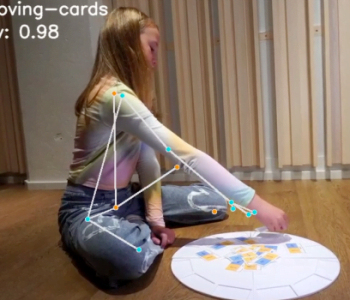
Med detta i åtanke syftar projektet SoRoMa (Sociala robotar i matematikundervisningen) till att ta några inledande steg mot att erbjuda individuell handledning till elever som behöver det. Genom att använda ett unikt tillvägagångssätt med ett matematikbaserat kortspel, använder detta projekt en social robot som handledare. Med hjälp av AI-teknologi anpassar sig roboten till situationen under handledningen.
Projektet finansieras av Högskolestiftelsen i Österbotten.
Not every student receives the necessary support within a classroom setting. While a one-to-one setting often would be for the best, the reality is that teachers often are understaffed, making this hard to achieve.
With this in mind, the project SoRoMa (Sociala robatar i matematikundervisningen) aims to make some preliminary steps towards providing individualized tutoring to students who need it. Using a unique approach involving a math-based card game, this project employs a social robot acting as a tutor. With the help of AI-techonlogy the robot is meant to adapt to the situation unfolding during the tutoring.
The project is funded by Högskolestiftelsen i Österbotten.
I rättsprocesser läggs stor vikt vid ögonvittnesmål. I många länder betraktas ögonvittnesidentifikationer som ett direkt bevis för skuld. På senare år har forskning dock visat att ögonvittnen inte alltid är så tillförlitliga som man tidigare antagit. Till exempel finns det globalt sett tusentals fall där dömda personer i efterhand med hjälp av DNA-bevis visats vara oskyldiga. Analyser av dessa fall visar att felaktiga ögonvittnesmål bidragit till domen i 70% av fallen.
För att höja vår rättssäkerhet behöver vi mer kunskap om vilka faktorer som påverkar tillförlitligheten av ögonvittnens identifikationer av gärningspersoner.
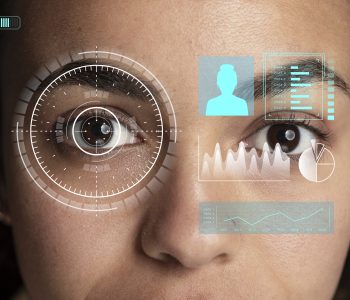
VRvittne är en rättspsykologisk studie där vi genom experiment i virtuell verklighet (VR) undersöker hur nivån av hotfullhet påverkar vittnens emotionella tillstånd och visuella uppmärksamhet, och hur dessa saker i sin tur påverkar vittnens förmåga att korrekt identifiera gärningsmän. Emotionella reaktioner mäts med hudkonduktans, och visuell uppmärksamhet med en ögonrörelsekamera.
Som en del i projektet har vi även utvecklat en AI-baserad mjukvara som analyserar videofiler och automatiskt identifierar ansiktens positioner och ger koordinater för dem, vilket kan användas för analyser av ögonrörelser.
Studien finansierades av Svensk-Österbottniska samfundet och genomförs i samarbete med forskare från New York University.
In legal proceedings, great importance is placed on eyewitness testimony. In many countries, eyewitness identifications are considered direct evidence of guilt. However, recent research has shown that eyewitnesses are not always as reliable as previously assumed. For example, globally, there are thousands of cases where convicted individuals have been later proven innocent with the help of DNA evidence. Analyses of these cases show that erroneous eyewitness testimony contributed to the verdict in 70% of the cases. To enhance our legal certainty, we need more knowledge about the factors that affect the reliability of eyewitness identifications of perpetrators.
“VR Witness” is a forensic psychological study where, through experiments in virtual reality (VR), we investigate how the level of threat affects witnesses’ emotional states and visual attention, and how these factors, in turn, affect witnesses’ ability to accurately identify perpetrators. Emotional reactions are measured using skin conductance, and visual attention is measured using an eye-tracking camera. As part of the project, we have also developed an AI-based software that analyzes video files and automatically identifies facial positions and provides coordinates for them, which can be used for eye movement analyses.
The study was funded by the Swedish-Ostrobothnian Society and is conducted in collaboration with researchers from New York University.
The overall objective of the Horizon Europe-funded APOLLO2028 project is to provide health and care workers, organisations, and healthcare system funders and policy makers with research-backed innovative solutions to help improve mental health, wellbeing, and capacity to be more resilient to changing environments (especially daily pressures and extreme events) at the workplace. The originality of the project is to consider resilience in health care in a holistic approach to build individual, team and organizational capabilities to face the next extreme events and daily pressures. Therefore, we will study individual factors affecting resilience, group factors, organizational factors, and develop a model involving all types of factors. This model will serve as a basis for the production of guidelines to be disseminated to health and care workers, their managers, as well as policy makers and health systems funders. We will also develop an AI-based system to support in the identification of stress factors and recommend actions. We will involve all the stakeholders in a co-design work to finalise our solutions. We will also review the cost effectiveness of our solutions. The main impact of our project will be a reduction of stress factors at the workplace, and an improvement of resilience of all the health and care workers. We will ensure our solutions are disseminated to all EU member states and adapted to the specifics of each of their health care systems.
Experience Lab leads a work package focusing on individual resilience. We are developing new measures of resilience based on daily measures of affective reactivity to workplace stressors, and exploring organizational factors that explain why people differ in their level of resilience. We are also heavily involved in the co-creation of a scenario analysis tool, where health care leaders will explore effects of leadership decisions in a simulated organization.
The project is led by University of Montpellier, France.
Other members of the consortium:
Bocconi University Trinity College Dublin Karolinska institutet Kaunas Universiity of Technology Vilnius University Eötvös Loránd University Massachusetts General Hospital (teaching hospital of Harvard Medical School) University Hospital of Montpellier Centre Hospitalier Universitaire De Nîmes
Funding from:
Horizon Europe HORIZON-HLTH-2023-CARE-04-02: Resilience and mental wellbeing of the health and care workforce
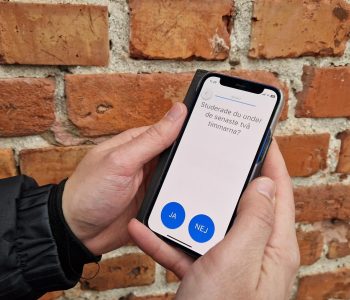
Prokrastinering, det vill säga att frivilligt skjuta upp ett avsett beteende trots att detta förväntas ha negativa konsekvenser, är en vanligt förekommande svårighet bland högskolestudenter. Prokrastinering kan ha negativa följder för studenternas studieframgång och välmående.
Inom projektet INTAKT kommer vi att öka förståelsen för orsaker till prokrastinering bland finlandssvenska studerande genom att använda ekologisk momentan bedömning (d.v.s. studenterna svarar flera gånger dagligen på frågor om huruvida de just nu prokrastinerar, och om relaterade faktorer.) Baserat på våra fynd kommer vi tillsammans med studenter att samskapa en skalbar digital intervention för att minska prokrastinering och träna hälsofrämjande färdigheter för minskat psykologiskt lidande och ökad produktivitet. Interventionen är händelsestyrd, vilket innebär att en app erbjuder hjälp omedelbart i de stunder när hjälp behövs. Interventionen testas i en randomiserad studie. Den slutliga interventionen kommer att vara fritt tillgänglig att använda efter projektets slut.
Projektet genomförs av Experience Lab, och stöds av två referensgrupper. Den vetenskapliga referensgruppen stöder i innehållsmässiga och metodologiska frågor och består av forskare från Uppsala universitet, University of Paderborn och Oxford University. Den kliniska referensgruppen bidrar till utvecklingen av interventionen och rekryterar deltagare, och består av studiepsykologer vid Novia, Helsingfors Universitet, Svenska handelshögskolan Hanken, Arcada och Åbo Akademi.
Projektet finansieras av Svenska kulturfonden och Svenska folkskolans vänner.
Procrastination, which is voluntarily postponing intended behavior despite expected negative consequences, is a common difficulty among university students.
Within the INTAKT project, we will increase understanding of the causes of procrastination among Swedish-speaking Finnish students by using ecological momentary assessment (i.e., students respond multiple times daily to questions about whether they are currently procrastinating, and related factors). Based on our findings, together with students, we will co-create a scalable digital intervention to reduce procrastination and train health-promoting skills to decrease psychological distress and increase productivity. The intervention is event-driven, meaning an app offers immediate help when needed. The intervention will be tested in a randomized study and will be freely available for use after the project ends.
The project is conducted by Experience Lab and is supported by two reference groups. The scientific reference group supports content and methodological issues and consists of researchers from Uppsala University, University of Paderborn, and Oxford University. The clinical reference group contributes to the development of the intervention and recruits participants, consisting of study psychologists from Novia, University of Helsinki, Swedish School of Economics Hanken, Arcada, and Åbo Akademi.
The project is funded by Svenska kulturfonden and Svenska folkskolans vänner.
 Project