When it comes to elementary school students, the relationship between math anxiety and math performance is still relatively unexplored. Therefore, within the project iFeelMath at Åbo Akademi University and the University of Oulu, we will follow 400 fourth-grade students on five occasions up to sixth grade. The project aims to provide answers to the classic “chicken or the egg” question, i.e., whether it’s math anxiety that affects performance, performance that affects math anxiety, or if the relationship is mutual.
The project is also one of the first to adopt a situational perspective in research to promote our understanding of the mechanisms behind the relationship between math anxiety and performance. In this part of the research, we will observe students at the Experience Lab while they do math tasks. The focus will be on both students’ self-reported experiences of math anxiety and physiological data using skin conductance.
With this design, we can see how students’ physiological responses (skin conductance) are linked to individual math tasks, enabling the modeling of situation-specific relationships and how these are connected to students’ self-reported math anxiety over time.
The project leader is Johan Korhonen, professor of educational psychology at Åbo Akademi University .
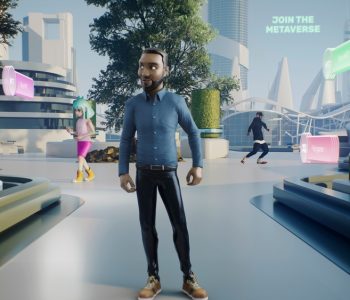
I dagens läge är Metaverse mera ett koncept än en verklig plattform, men förväntningarna är stora och många företag satsar ansenliga summor på att etablera sig virtuellt med sikte på ett kommande, stort Metaverse.
Syftet med detta projekt var att sammanföra aktörer för att orientera oss i olika aspekter av Metaverse, med sikte på ett framtida större forskningsprojekt. I Metaverse finns en mångfald av teman att förhålla sig till och orientera sig i: existerande plattformar, teknologins möjligheter och begräsningar, affärsmodeller, etik, innehållsproduktion och virtuella spelmiljöer, datasäkerhet, människans upplevelse av att agera i Metaverse etc.
Projektet gav ett flertal resultat:
Experience Lab kom med som finländsk partner i ett europeiskt Urbact nätverk – https://urbact.eu/networks/metacity som utröner små och medelstora städers ingångar i metaverse. Arbetet i projektet sker tillsammans med Nykarleby stad.
Experience Lab deltog i konferensen Smart City Expo and Conference med temat metaversum
Experience Lab deltar i referensgruppen för Åbo Akademis projekt DUTAR kring virtuella miljöer för undervisning och forskning
At present, the Metaverse is more of a concept than a real platform, but expectations are high, and many companies are investing substantial sums to establish themselves virtually in anticipation of a forthcoming, large-scale Metaverse.
The purpose of this project was to bring together stakeholders to explore various aspects of the Metaverse, aiming for a future larger research project. The Metaverse offers a variety of themes to consider: existing platforms, the possibilities and limitations of technology, business models, ethics, content production, virtual gaming environments, data security, human experience of acting in the Metaverse, etc.
The project yielded several results:
Experience Lab joined as a Finnish partner in a European Urbact network – https://urbact.eu/networks/metacity which explores the entry points of small and medium-sized cities into the Metaverse. The work in the project is carried out in collaboration with the city of Nykarleby.
Experience Lab participated in the Smart City Expo and Conference with the theme of the metaverse.
Experience Lab is part of the reference group for Åbo Akademi’s project DUTAR on virtual environments for teaching and research.
The iFaceMath project’s aim is to investigate the dynamics between situational emotions, motivation, and math task performance. Applying novel technology, primary school students’ emotions are detected by facial expressions while they are performing math tasks. We set two research questions: 1) What kind of emotions are detected during performing typical multiplication tasks and playing a math game, and do these emotions differ depending on the type of activity? 2) How do detected emotions, situational interest and math performance are related to each other during performing math tasks?
Experience Lab plans and carries out the data collection for the project as part of the larger project “iFeelMath” focusing on exploring students’ math anxiety, led by Prof. Johan Korhonen.
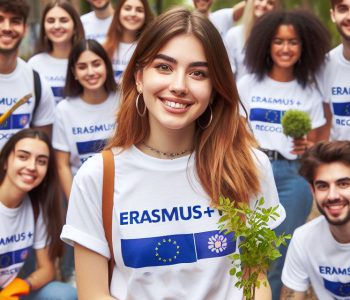
ERASMUS+ ReCoCreaYOUTH aims to help local governments and NGOs to enhance the relevance of their activities for local groups of youth, by improving their readiness to co-create, through new methods and tools for more inclusive youth participation, and piloting them with youth on local topics of joint concern. The project will result in guidelines for (mid-size and smaller) municipalities and NGOs that face similar challenges but lack knowledge of co-creation to facilitate democratic changes, innovations and youth empowerment.
The consortium is led by Karlstad University (Sweden) and consists of ten partners from four countries, among them Åbo Akademi University and the cities of Vasa and Nykarleby.
The project team at ÅAU is a collaboration between Experience Lab, Regional Studies, and Vasa Övningsskola.
Emotional reactions such as anger, fear and anxiety can play a significant part in politics and in spurring extreme dislike between various partisan camps in society. The academic community has seen a rise in the interest of studying the role of emotions and media in polarization. Regarding affective polarization, an important are of research is to explore what impact discrete emotions have in the formation of attitudes of affective polarization. Furthermore, more research is needed on how emotions in media content increase or decrease affective polarization. The research project “EmoAffect” strives to contribute with new knowledge by studying how emotional reactions drive affective polarization.
The project is funded by the Research Council of Finland and carried out at Åbo Akademi University.
Research group Professor, Kim Strandberg Associate professor/docent, Jenny Lindholm Associate professorship/docent, Marina Lindell Senior researcher, Tom Carlson MS, Research assistant, Jesper Eklund
The overarching aim of the project “DIGITAL4ALL – Building the capacity of universities to develop digital strategies to serve all learners” is to support higher education institutions in designing and providing digital learning experiences that are inclusive and equitable for all, through appropriate strategies and practices. The project supports a digital transition where participation of all students is established, especially those at risk of marginalisation due to diverse needs. It provides educators with digital and pedagogic competences and strategies needed to provide student-centred experiences.
To achieve the above objectives and address the priorities, the partnership creates a set of tangible outcomes, including an innovative toolkit, a training course, and an e-learning platform, and a repository of open education resources on digital inclusion in higher education.
In addition to being involved in all project activities, Experience Lab is co-leading a work package investigating the state-of-the-art of digital equity and inclusion in higher education.
The project is co-funded by the European Union and the duration of the project is 1.12.2023-30.11.2025. It is led by Åbo Akademi University.
The project Inclusion, Participation, and Peace Building through Mediation in Media (IncludeMe+), aims to empower higher education institutions, media, civil society organisations, and students to become responsible and active collaborators in shaping the future of communication, to promote and establish inclusion, participation, and peacebuilding across Europe. The project will increase participation and civic engagement by raising awareness and understanding of the context and values of the European Union, the principles of unity and diversity, and by providing new ways of thinking about and creating media content.
To achieve the above objectives and address the priorities, the partnership creates a set of tangible outcomes, including a report based on participatory action research on the topic, an innovative training program accompanied by a training and transferability guide, and a video vox pop showcase docuseries.
Experience Lab is coordinating the project, which is led by Emmanuel Acquah, Associate Professor in Education at Åbo Akademi University. In addition, Experience Lab is involved in all project activities, ranging from dissemination to research and the design and development of the outcomes.
The project is co-funded by the European Union and the duration of the project is 1.12.2023-31.5.2026.
How do you make a city pleasant, productive, accessible and easy to interact with? These are issues that are being worked on within the URBACT program, which consists of networks of cities around Europe that work together to strengthen the development of localities by exchanging experiences and building networks between regional and local actors.
Åbo Akademi University’s Experience Lab is the first academic project partner in URBACT, which today includes all EU member states and also Norway and Switzerland.
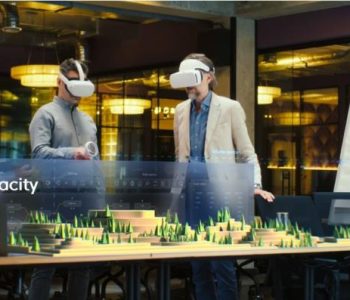
The Metacity network , which focuses on small and medium-sized cities, aims to increase competitiveness of small and median tech-aware cities, benefiting from the opportunity to enhance service efficiency and citizen satisfaction provided by the metaverse. By integrating metaverse technologies, cities can create immersive digital environments for education, healthcare, tourism, and public services, enabling streamlined communication, remote access to services, and personalized experiences, levelling the playing field with larger cities. Metaverse-driven urban planning fosters innovation, economic growth, and ensures that citizens have access to cutting-edge solutions, ultimately improving their overall quality of life.
Experience Lab works with the city of Nykarleby in Metacity. The network also counts actors from nine other European countries participate, including Härnösand in Sweden, with which we will collaborate closely, and is led by Fundão in Portugal, with whom we have collaborated in previous URBACT and INTERREG Europe projects.
The project SPROK has received Research to Business funding from Business Finland for the years 2023-2025. The overarching aim is to evaluate different commercialization routes to find the best business strategy for our digital second language learning game. SPROK’s development stems from the significant achievement gap between students with immigrant and native backgrounds, and the challenges many adult immigrants face in obtaining work due to insufficient language skills. We hope to encourage growth in the Finnish and international community by developing linguistic skills as a core class material in mainstream and immigrant classrooms. Sprok is designed to complement traditional workbooks while still allowing teachers to understand student progress. Although Sprok is designed to meet the needs of immigrants and mainstream classrooms, it is well-suited for private consumer use, thus, has benefits for increasing the number of highly qualified workers, which fills the gap in the ageing Finnish and global population.
The target groups are migrants, mainstream classrooms, and private consumers.
Sprok is a digital second language learning game targeting migrants, mainstream classrooms, and private consumers.
Supporting L2 learning is essential to improving educational, economic, and social opportunities for immigrant populations. Sprok’s design will encourage growth in the Finnish and international community by developing linguistic skills as a core class material in mainstream and immigrant classrooms. Sprok is designed to complement traditional workbooks while still allowing teachers to understand student progress. Although Sprok is designed to meet the needs of immigrants and mainstream classrooms, it is well-suited for private consumer use, thus, has benefits for increasing the number of highly qualified workers, which fills the gap in the ageing Finnish and global population.
The uniqueness of Sprok is that it is based on the highly reputed Finnish national core curriculum, the Common European Framework of Reference for language (CEFR) skills, academic research, and cultural knowledge. Additionally, it will have the following educational features: a teacher backend, a monolingual approach (uses Swedish to teach Swedish), collaborative gameplay, an explorable environment, a design enabling expansion to a broader audience, and a feedback algorithm to enhance learning. The game will be developed in an iterative process that requires the active involvement of potential end-users. This ensures the game is both educative, fun, and attractive for various stakeholders.
The project has received Research to Business funding from Business Finland for the years 2023-2025. The overarching aim of this project is to evaluate different commercialization routes to find the best business strategy for our digital second language learning game SPROK. in order to make it a highly successful global educational game for digital second language learning. An additional aim is to continue the applied research of Sprok.
AILIT är ett forsknings- och utvecklingsprojekt som arbetar för att stärka AI-litteraciteten inom utbildning. Projektet fokuserar på att utveckla kunskap, färdigheter och förhållningssätt som hjälper elever och lärare att förstå, använda och kritiskt granska artificiell intelligens på ett ansvarsfullt sätt.
Genom forskningsbaserat utvecklingsarbete, samskapande och nära samarbete med skolor utvecklar projektet undervisningsmaterial och pedagogiska modeller som stöder undervisning om artificiell intelligens. Materialen behandlar bland annat hur AI fungerar, dess möjligheter och begränsningar, etiska frågor samt AI:s påverkan på individer, utbildning och samhälle.
Projektet arbetar med att ta fram material för åk 1-6, 7-9 samt för andra stadiet. Projektet involverar lärare, elever, lärarstuderande och lärarutbildare i utvecklingen av undervisningsmaterial som testas och vidareutvecklas i autentiska undervisningsmiljöer. Målet är att skapa praktiska och forskningsbaserade resurser som stöder skolor i arbetet med att utveckla elevers AI-kompetens och digitala handlingsförmåga.
Ailit är ett samarbetsprojekt mellan Experience Lab och Helsingfors Universitets svenska professur i AI och samhälle (Linda Mannila). Projektet bidrar till att utveckla framtidens undervisning i en tid där artificiell intelligens får en allt större betydelse för lärande, arbete och samhällsutveckling. Projektet finansieras av Svenska Kulturfonden.
AILIT is a research and development project that aims to strengthen AI literacy in education. The project focuses on developing the knowledge, skills, and critical awareness that help pupils and teachers understand, use, and critically evaluate artificial intelligence in a responsible and informed manner.
Through research-based development, co-creation, and close collaboration with schools, the project develops educational materials and pedagogical models that support teaching and learning about artificial intelligence. The materials address topics such as how AI works, its opportunities and limitations, ethical considerations, and the impact of AI on individuals, education, and society.
The project develops educational resources for primary education (grades 1–6), lower secondary education (grades 7–9), and upper secondary education. Teachers, pupils, student teachers, and teacher educators actively participate in the development process, and the materials are continuously tested and refined in authentic learning environments. The goal is to create practical, research-based resources that support schools in fostering pupils’ AI literacy and digital competencies.
AILIT is a collaborative project between Experience Lab and the Swedish-language Professorship in AI and Society at the University of Helsinki (Linda Mannila). The project contributes to shaping the future of education in a time when artificial intelligence is becoming increasingly important for learning, working life, and society. The project is funded by the Swedish Cultural Foundation in Finland.
 Project