Page with comments disabled

Projects - Finished

DIGI-MODE

The purpose of the DIGI-MODE project is to promote the increased usage of digital tools and in particular Virtual Reality solutions to companies located in Ostrobothnia. This is mainly achieved through the planning, development, demonstrations and validation of so-called digital twins. Three major digital twins will be developed in cooperation with local companies from different business sectors: The manufacturing industry, the real estate and construction sector and the energy sector.

A digital twin is a real-time virtual representation of a physical object or process. Digital twins can visualize data from different types of sensors, such as energy meters, water meters, cameras and other IoT devices. Using digital twins, it’s possible to streamline remote working, cooperation and maintenance. This is something which has grown increasingly relevant over the last few years.

The DIGI-MODE project is a collaboration between the University of Vaasa, VAMK, Novia UAS and Åbo Akademi. The project will make use of the existing infrastructure available at the University of Vaasa, Technobothnia, the Design Centre MUOVA (VAMK) and Experience lab at Åbo Akademi.

Results – Architectural Masser

More information at: http://www.digi-mode.eu/

Projects - Finished

Qvarken Game Lab

One of the biggest challenges in establishing the gaming industry in peripheral areas lies within the startup scene, working in a regional context where there is limited experience and few financiers. By establishing the cross-border competence center Qvarken Game Lab, this gap in the Botnia-Atlantica program area is compensated for.

The project’s focus is on gathering, refining, and advancing knowledge about the gaming industry to strengthen the gaming sector both cross-border and locally. The ambition of this intensive implementation project is for the initiative to develop and establish itself during the project period and then continue to grow independently after the project’s conclusion.

The project’s activities involve coordinating actors in a cross-border competence center for game development to gather education, research, and industry resources to collectively enhance innovation in the gaming industry and its interaction with other sectors and the surrounding society. This is achieved by creating meeting places for creative workshops, working on market-oriented gaming innovations with a focus on concrete results, strategically addressing gender equality issues in the gaming industry, and promoting collaboration between the gaming sector and other industries.

The overall goal and purpose of the project is to stimulate the establishment of a sustainable environment for game development and related activities through collaboration and interaction among project partners within the Botnia-Atlantica region’s innovation system. This is accomplished through various processes:


Establish Qvarken Game Lab

The goal of the competence center Qvarken Game Labs is to foster growth among gaming companies in the regions within the Botnia-Atlantica program area where the industry is currently lacking. This is achieved by networking, enhancing innovation and competitiveness through mentorship and expert knowledge, organizing creative spaces like game jams and hackathons, and working with venture capital to facilitate potential investments.

Research & Education

Qvarken Game Lab aims to strengthen and tailor the education available in the program area to better align with the gaming industry’s needs. This is accomplished through discussions between educational providers and the industry in coordinating the competence center. Relevant research and education are enhanced through collaboration with the competence center to elevate innovation and competitiveness.

This is facilitated through access to the User Experience Laboratory (Experience Lab), where gaming entities gain access to UX design expertise, research-based design methods, as well as equipment and techniques for testing the usability and user experience of their products. This occurs at various stages of development concerning the target audience.

Gender Equality & Inclusion

Qvarken Game Lab advocates for increased gender equality within the gaming industry. Since women are significantly underrepresented in gaming companies, the competence center strategically engages in initiatives to change attitudes and practices related to gender equality within the gaming sector. The focus is on leveraging the innovators, experts, and inspirers present in the regions.

Upon the conclusion of the project in June 2022, the competence center has developed or initiated the following processes:

  • Conducted a pilot initiative connecting a network of actors within the gaming industry, identifying effective methods and processes to enhance the gaming industry’s innovation capacity in the Botnia-Atlantica program area.
  • Strengthened the readiness of innovation system actors to contribute research and expertise to the competence center and to evolve collaboratively.
  • Ensured that gender equality, diversity, and accessibility permeate all parts of the project, contributing to a stronger competence center.

Experience Lab contributes by bringing expertise in user-centered design and research-based knowledge and methods in game development. Moreover, it connects to the growing research in gaming at the university and the networks associated with it.

digitalt på distans Projects - Finished

Digital Innovation Processes at a Distance

The aim of the project is to:

Evaluate virtual co-creation processes based on the needs of regional actors regarding innovation work and open innovation (both process and tools) from a user perspective, and based on this knowledge,

Develop concepts for digitally based co-creation with a good user experience. The concept development will result in concrete tools and processes for implementation and application in various contexts, with examples in the form of validated best practices.

The project includes the following actions:

A preliminary study in the form of interviews with 10-15 key persons in companies and organizations working with innovation and development.

Implementation of 2-3 pilot experiments with tools identified to address challenges in the process.

Compilation of a checklist for virtual innovation processes based on the results.

Presented through a workshop for interested companies and organizations.

The project results in:

Verified knowledge about the user experience of co-creation with digital tools – both the usability of the tools, the content experience, and the social experience – and the processes in which these tools are included.

Improved development processes that consider the needs and expectations of all participants and lead to better results.

This also supports and develops participants’ learning and innovation capacity.

Support in the form of concrete manuals and checklists on how the work is conducted and how to handle challenges along the way, as well as strengthened regional, context-adapted competence that can lead to the development of new services, improvement of existing services, and identification of development opportunities.

Contact us:

Kimmo Rautanen

Yvonne Backholm-Nyberg

Ruxe Projects - Finished

RUXE

RUXE

The project’s objective is to find the best solution for conducting user experience studies of digital solutions entirely remotely. The need for remote testing has arisen due to the pandemic, which has made physical activities, both in the laboratory and on-site at companies, impossible. However, even without a pandemic, this development is essential to find a smooth and cost-effective way for companies and organizations to evaluate their digital solutions before launching them on a global market.

Remote testing also supports the transition to a digital and low-carbon society, where the significance of geographic location decreases.

During the project period, tests of various digital solutions are carried out in collaboration with four companies in the region and researchers in the environment, in the form of pilot studies, to find the solution that best meets the needs and provides the most reliable results to ensure a good user experience of the product/service/solution.

The project is co-financed by the Ostrobothnia Region Association.

Project Leader: Sören Andersson, soren.andersson@abo.fi

Projects - Finished

Speech Recognition for Finnish-Swedish Dialects through Artificial Intelligence –…

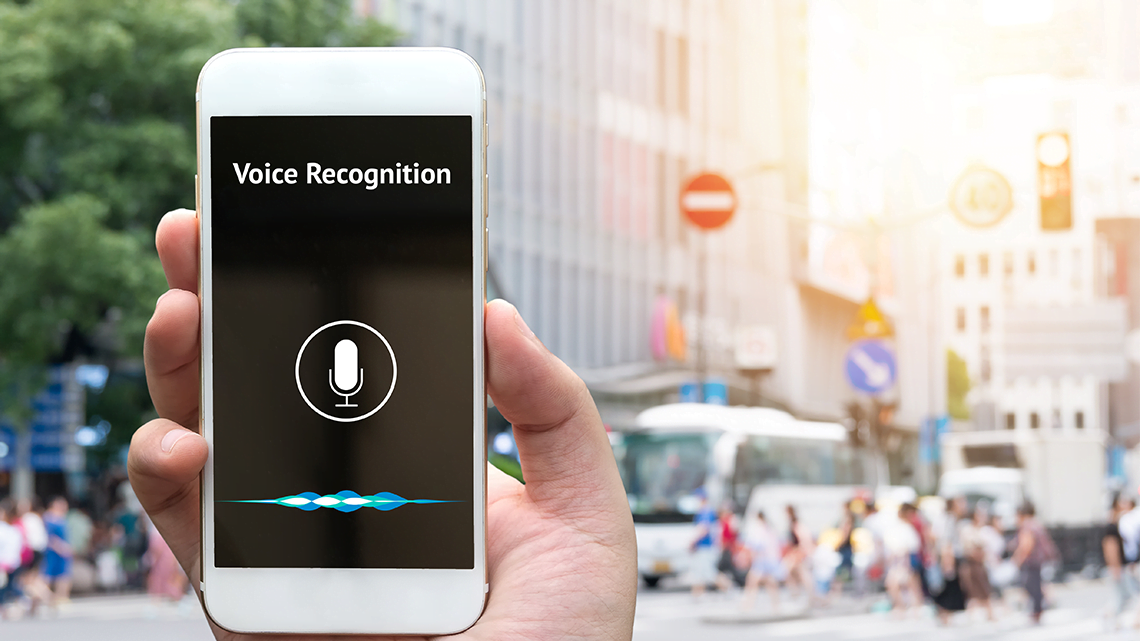
Speech Recognition for Finnish-Swedish Dialects through Artificial Intelligence – TaFiDiAi

Åbo Akademi/Experience Lab collaborates with Arcada University of Applied Sciences and StageZero Technologies in a research and development project on the topic of speech recognition of Finnish-Swedish dialects. The project has received funding from the Swedish Cultural Foundation and is led by Arcada.

The goal is to collect open-access speech samples from various Finnish-Swedish dialects in different parts of Swedish-speaking Finland. Based on this data, the project partners develop speech recognition algorithms, which are then evaluated together with Finnish-Swedish end-users.

The purpose is to explore how well the study participants perceive themselves and their dialect to be understood by the system and how reliable and competent they perceive the system to be. The guiding principle is to increase understanding of human perception and usage of robots and automated systems, as this knowledge can contribute to the development of artificial intelligence and its integration into society.

The project is conducted by Leonardo Espinosa at Arcada, Susanne Hägglund and Sören Andersson at Experience Lab/Åbo Akademi, and Thomas Forss at StageZero Technologies.

[SV]

Taligenkänning för Finlandssvenska Dialekter genom Artificiell Intelligens – TaFiDiAi

Åbo Akademi/Experience Lab samarbetar med yrkeshögskolan Arcada och StageZero Technologies i ett forsknings- och utvecklingsprojekt på temat taligenkänning av finlandssvenska dialekter. Projektet har fått finansiering från Svenska Kulturfonden och leds av Arcada. 

Målet är att samla in open-access tal på olika finlandssvenska dialekter på olika håll i Svenskfinland. På basen av den här datan utvecklar projektparterna taligenkänningsalgoritmer som sedan utvärderas tillsammans med finlandssvenska slutanvändare.

Syftet är att utforska hur väl studiedeltagarna upplever sig och sin dialekt bli förstådda av systemet samt hur tillförlitligt och kompetent de uppfattar systemet vara. Ledstjärnan är att öka förståelsen kring människans uppfattning och användning av robotar och automatiserade system eftersom denna kunskap kan bidra till utvecklingen av artificiell intelligens och dess integration i samhället. 

Projektet genomförs av Leonardo Espinosa vid Arcada, Susanne Hägglund och Sören Andersson vid Experience Lab/Åbo Akademi samt av Thomas Forss på StageZero Technologies. 

kulturfonden
games and learning Projects - Finished

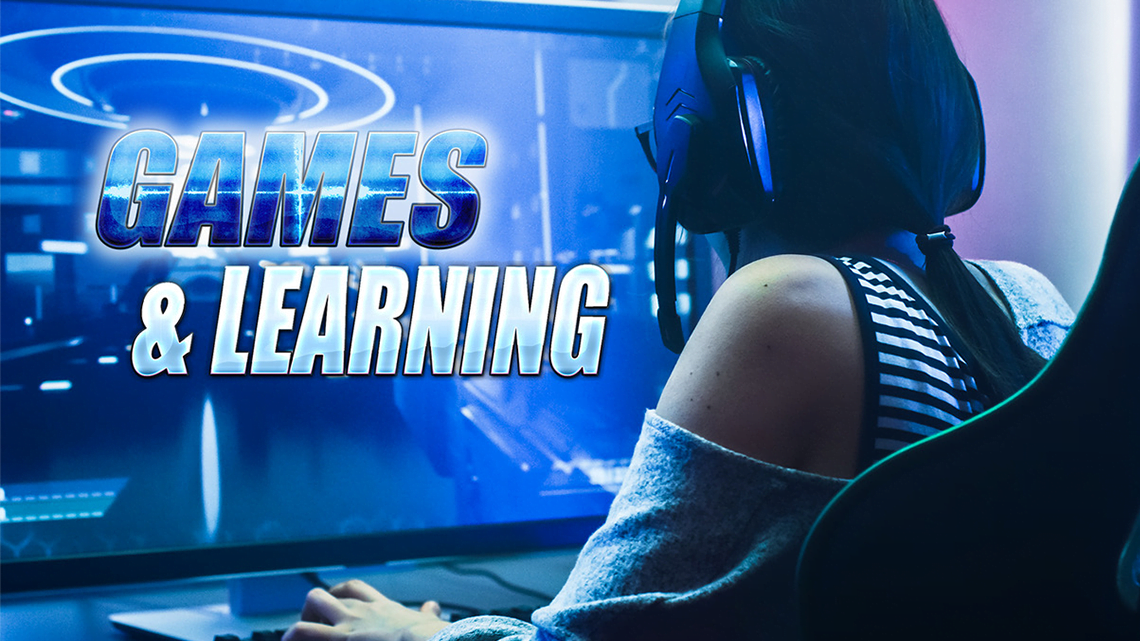
Games and Learning – a research based network

While digital games have gained some research interest, there remains untapped potential in terms of learning and education. We see a need to explore research on games to support teacher education in terms of learning in and for the future. The constant development of digital games results in a rapidly shifting environment where all actors are needed to facilitate a research-based understanding of games and learning. 

Through this project, we endeavour to create possibilities for networking and collaboration between relevant actors on a regional, national and international level. 

We aim to strengthen the field of games and learning at the Faculty of Education and Welfare studies at ÅAU through collaboration. We identify research gaps and the needs from those working in the field, strengthen networks as well as design the pilot phase of this research project.  

We also aim to create ecosystems with relevant actors – researchers, teachers/schools/organisations and game developers. Through this project we combine the competence on games and learning as well as other relevant areas at the Faculty of Education and Welfare studies; Experience Lab, Matilda Ståhl’s research as well as other game-oriented research endeavours (e.g., Tandem på spel and Redit).  

The project has two phases: 1) the networking and piloting phase and 2) the implementation phase. Likewise, the project has two main areas – research as well as networking and collaboration, which in turn creates a supportive and engaging environment for developing new ideas.  Through creating a network based is Ostrobothnia with national and international collaborations and networks, we strengthen the research environment and the teacher education at the faculty. Further, as part of the project, we have together with Dr Mariana Rocha (Dublin Technological University) established “Games and Learning – an International Junior Researchers Network”, see more information below. 

Our short-term goal is to create a platform for research on games and learning. In terms of long-term goals, we aim to support the creation of international research projects where the results are employed in teacher education and the educational field at large.  

Research coordinator: Matilda Ståhl, matilda.stahl@abo.fi 

Project manager: Yvonne Backholm-Nyberg, yvonne.backholm@abo.fi  

Project team: Matilda Ståhl, Yvonne Backholm-Nyberg och Joachim Majors
 

Games and Learning – an International Junior Researchers Network 

The network currently consists of around ten members from six different countries, including fresh PhD-students to post-doctoral researchers. We have monthly online seminars where we present current projects and so far, we have looked at drafts for papers, posters as well as games in progress.  

If this sounds like an interesting network you would like to be part of, we are happy to announce that we are accepting new members! However, to be able to maintain a level of trust and constructive criticism during these seminars, we wish to keep the network on the smaller side with active members. Therefore, we ask anyone interested in joining our network to contact either Matilda Ståhl or Mariana Rocha by email (see information below), give a short presentation of yourself and why you would like to be included in the network! 

Matilda Ståhl, Åbo Akademi University 
matilda.stahl@abo.fi 

Mariana Rocha, Dublin Technological University
Mariana.Rocha@TUDublin.ie
inclusiveHE-logo Projects - Finished

InclusiveHE – Designing and supporting inclusive practices in Higher…

This project aims to support higher education institutions in the development of innovative and inclusive policies and practices, including:

  • Integration of inclusive practices in designing and teaching courses;
  • Increase of access, participation and completion rates of underrepresented and disadvantaged groups;
  • Increase of the competitiveness of the European Higher Education sector.
    The outputs of the project are:

The outputs of the project are:

  1. Toolkit for supporting the development of inclusive policies in higher education, targeting administrators and policy-makers at higher education institutions;
  2. Training course on the design of inclusive education programmes targeting learning designers and academics;
  3. e-learning platform and a MOOC on inclusive practices for academic and support staff.

Experience Lab is involved in project coordination and research together with project leader Emmanuel Acquah from the Minority Research Profile.


The project is co-funded by the Erasmus+ programme of the European Union.

Project Leader and Coordinator: Åbo Akademi University

Project team at ÅAU: Emmanuel Acquah (project lead), Anette Bengs (coordination and research), Kalypso Filippou (research), Yvonne Backholm-Nyberg (communication and coordination)

Project Consortium: Åbo Akademi University (lead partner) Centre for Advancement of Research and Development in Educational Technology LTD-CARDET in Cyprus, University of Pitesti in Romania, University of Latvia, European Universities Continuing Education Network (eucen), Innovade LI LTD in Cyprus

Project webpage: https://ec.europa.eu/programmes/erasmus-plus/projects/eplus-project-details/#project/2020-1-FI01-KA203-066572

includeME Projects - Finished

Include Me – Inclusion Through Mediation

The Inclusion Through Mediation Project (IncludeMe) aims to empower learners, activists and migrants to become peer-to-peer mediators in their communities and their wider area. Include Me recognises that the Europe 2020 goals for a more inclusive Europe with higher social integration and community cohesion are more important today than ever in light of increasing societal tension, linked to the economic crisis, immigration & refugee crisis and increasing multi-ethnicity communities etc. Educating migrants and refugees as well as higher education providers, community activists and workers, in mediation skills can play a substantial, positive role in changing social dynamics.

Thus, the project aims to:

  • Undertake EU wide research to identify the skills, opportunities and best practices on social mediation across Europe and publishe a Good Practice Guide of the findings.
  • Develop a set of Open Education Resources to deliver mediation skills training to learners and volunteers in creative, dynamic ways; allowing them to maximise inclusion through mediation.
  • Produce the IncludeMe MOOC which will engage a high number of volunteers, migrants and stakeholders, allowing them to learn in flexible and adaptive new ways.

The main target groups for this project are:

  • Refugees/migrant background and other disadvantaged individuals.
  • Community workers, NGOs and voluntary sector organizations.
  • Education providers and all their staff.
  • National education stakeholders.
  • EU policy makers and EU global organisations directly involved in the education sector.

includemeproject.eu https://www.includemeproject.eu/

erasmus-plus project: https://ec.europa.eu/programmes/erasmus-plus/projects/eplus-project-details/#project/2020-1-FI01-KA203-066490

Projects - Finished

REDIT

The project aims to research, design and develop a digital second language learning game that could be used to teach Swedish and Finnish as a second language to newly-arrived immigrant students in Finland.

The vision is that the game will support the preparatory class curriculum and can be used both in school and during leisure time. The game is developed through a user-centred design process, where both teachers, students, reearchers and game developers participate throughout the process.

The research that is carried out in parallel with the game development, focuses partly on the process (the effectiveness of using user-centred co-creation approach), the adaptation of content from the preparatory class curriculum and responsive digital pedagogy as a means to engage 21st century digital natives.

This project addresses the current achievement gap between native Finns and immigrants and has the potential to improve communication, well-being, and social integration in Finland and other European countries that face similar integration hurdles.

The project is funded by Svenska kulturfonden and Högskolestiftelsen i Österbotten.

The project is a collaboration between Åbo Akademi University and Novia University of Applied Sciences.

The project is led by the Minority Research Profile and coordinated by Experience Lab at Åbo Akademi University.

Hippo hybrida lärstigar Projects - Finished

HIPPO – Hybrid Learning Paths

Project Goal: The aim of the project is to understand how teachers and students experience the digital learning environments and educational materials that shape the digital learning paths that have emerged in the aftermath of the COVID-19 pandemic. We begin by focusing on the positive experiences and the elements that work well.

The study is conducted at Vasa Övningsskola’s upper secondary school in collaboration with the publishers Otava and Schildts & Söderströms, whose digital educational materials are included in the study.

Using a user-centered perspective, we study the learning paths to gain a research-based understanding and vision of what future hybrid learning paths could look like in a reality where in-person and distance learning are blended.

Based on the results, we create a proof of concept for a successful hybrid learning path, based on the documented experiences of teachers and students.

The concept will be developed through a collaborative process involving researchers, teachers, students, and the publishers.

Project Management: Yvonne Backholm-Nyberg

Research Manager: Fritjof Sahlström

Project Team: Joachim Majors, Antti Paakkari, Verneri Valasmo, Susanne Hägglund

[SV]

HIPPO – Hybrida Lärstigar

Projektets mål är att förstå hur lärare och elever upplever de digitala lärmiljöerna och läromedlen som formar de digitala lärstigar som uppstått i covid-19 pandemins kölvatten. Vi tar avstamp i de positiva upplevelserna och i de element som fungerar bra.

Studien utförs i Vasa Övningsskolas gymnasium i samråd med förlagen Otava och Schildts & Söderströms, vars digitala läromedel ingår i studien.

Utgående från ett användarcentrerat perspektiv studerar vi lärstigarna för att få en forskningsbaserad förståelse för och vision kring hur framtidens hybrida lärstigar kunde se ut – i en verklighet där närstudier och distansstudier blandas.

På basen av resultaten skapar vi ett proof of concept för en god hybrid lärstig, baserad på lärarnas och elevernas dokumenterade erfarenheter.

Konceptet kommer att arbetas fram i en samskapande process mellan forskarna, lärarna, eleverna och förlagen.

Projektledning: Yvonne Backholm-Nyberg 

Forskningsansvarig: Fritjof Sahlström 

Projektgrupp: Joachim Majors, Antti Paakkari, Verneri Valasmo, Susanne Hägglund